
Pokemon Card Value — What Are Your Cards Worth Today?
Check any card's value below — every price is a daily market value built from completed TCGplayer sales, with prices by condition and 30 days of history on each card's page. Free, no signup.
Need prices by condition side by side? Try the Pokemon card price checker. Or start from the most expensive Pokemon cards and cards worth money lists.
Free · No signup · tracking prices for 2,947 cards · 21 sets · updated daily (last 2026-11-09)
Not sure where to start? Open any card in the list below, or read on — we cover the three questions people ask most: how much are Pokemon cards worth in general, how to check Pokemon card value on one specific copy, and why two copies of the same card can be worth very different amounts. Every figure below is the Near Mint market value that TCGplayer computes from completed sales, rebuilt daily — not a seller's asking price, and not an appraisal of your specific copy.
Pokemon card value list: the highest-priced cards in our book today
Highest-value cards in our price book, by current TCGplayer market price.


Latest sets
- 30th Celebration card list · 158 cards
- Pitch Black card list · 120 cards
- Chaos Rising card list · 120 cards
- Perfect Order card list · 120 cards
- Ascended Heroes card list · 290 cards
- Mega Evolution card list · 186 cards
- Black Bolt card list · 168 cards
- White Flare card list · 173 cards
- Destined Rivals card list · 244 cards
- Journey Together card list · 187 cards
- Prismatic Evolutions card list · 176 cards
- Surging Sparks card list · 251 cards
- Neo Revelation card list · 64 cards
- Neo Discovery card list · 74 cards
- Neo Genesis card list · 104 cards
- Gym Challenge card list · 129 cards
- Gym Heroes card list · 129 cards
- Team Rocket card list · 79 cards
- Fossil card list · 62 cards
- Jungle card list · 63 cards
- Base Set card list · 50 cards
How to check Pokemon card value: four things that move the number
- 1. Which print it is. A Base Set Charizard and a Base Set 2 Charizard are different cards with different prices, and 1st Edition / Shadowless copies of the same card sit in a different bracket again. Check the set symbol and the card number before you compare prices. The original Base Set card list is where the oldest Charizard, Blastoise and Venusaur prices live.
- 2. Condition. Wear is the single biggest discount on a raw card. Measured on our own cards, the median Damaged copy is worth 39% of the same card's Near Mint price — the full tier table is below.
- 3. Grading. A graded copy is a different market. PSA 10, 9 and 8 prices for the same card can differ by multiples, and grading only pays off above a certain card value.
- 4. Which market you're reading. TCGplayer, CardMarket and eBay don't always agree. We index one source per day so the numbers stay comparable over time.
Pokemon card value by condition: how wear cuts a price
Every price we publish is a card-level market price — but two copies of the same card can be worth very different money depending on corners, edges, surface and creases. TCGplayer prices raw cards in five condition tiers, so the table below is measured on our own 2945 cards: for each tier, the share of that card's Near Mint market price it actually holds.
| Condition | Share of Near-Mint value | What counts |
|---|---|---|
| Near Mint (NM) | 100% | reference point — no visible wear, sharp corners |
| Lightly Played (LP) | 80% (mid 63–105%) | faint corner whitening or wear only visible at an angle |
| Moderately Played (MP) | 71% (mid 48–118%) | visible edge wear and whitening, no deep crease |
| Heavily Played (HP) | 42% (mid 33–57%) | heavy corner/edge wear, possible light crease or pen mark |
| Damaged (DMG) | 39% (mid 26–78%) | deep creases, tears, whitening, writing |
Shares are medians across 2945 cards in our price book, computed from TCGplayer's per-condition market indices for the same card — "mid" is the middle half of the sample. Wear discounts land steeper than the ranges dealers quote because the Near Mint index on a thinly traded card rests on very few sales; each card page shows how many copies actually sold.
Pokemon card value after PSA grading: 10 vs 9 vs 8
Grading does not lift every card equally — the premium concentrates at the top grade. These are the multipliers over the raw (ungraded) Near-Mint price that graded-copy markets commonly cite for scarce Pokemon cards:
| Grade | Typical price vs raw NM | Why |
|---|---|---|
| PSA 10 (Gem Mint) | 2–4× (marquee vintage: 10×+) | only a small % of submissions qualify; top-grade scarcity sets the floor |
| PSA 9 (Mint) | 1.1–1.5× | close to a clean raw copy — buyers pay for the slab, not the condition |
| PSA 8 (NM-MT) | 0.9–1.2× | often barely clears the raw price; grading cost can exceed the gain on cheap cards |
Pokefoil publishes daily raw-card market prices built from TCGplayer's completed sales; graded-copy premiums above are commonly cited industry ranges, not measured from our sample — check a grading service's population report before submitting.
Why a price here can differ from eBay or a shop
The number on each card page is the TCGplayer market price, an index built from completed sales. Sellers on eBay often list a card well above what it actually sells for, and a local shop that buys from you will pay less than market because it has to resell at a profit.
Thinly traded cards need extra care. When a card sells only a few times a month, one unusual sale can move the index a long way. Each card page shows how many copies sold in the last 30 days and the lowest and highest sale in that window, so you can see how much weight the headline price can carry. If only two or three copies sold, treat the price as a rough guide and look at the individual sales before you buy or sell.
Condition matters too. The headline price is for an ungraded Near Mint copy. A card with whitened edges, a crease or a scratched holo sells for less, and graded copies trade on their own market. If your card is not Near Mint, start from the Lightly Played or Moderately Played price on its page.
Prices refresh once a day. When a new set has just come out, expect bigger swings in the first few weeks while supply settles.
Pokemon card value by set: the same card, different bracket
Card value is set-bound. The set a card was printed in, the print run, and whether it was reprinted all feed into what it's worth today — which is why we list every card under its set rather than pooling them into one number. Start from the full price guide, or open a set below to see what the whole run is doing.
Frequently asked questions
How much is my Pokemon card worth?
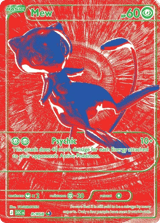
Find your card in the price list below (or on the full price guide) — the number we publish for it is the Near Mint market price that TCGplayer computes from completed sales, rebuilt every day. For example, Mew (R) (30th Celebration) is $4492.44 as of 2026-11-09. Your copy's price depends on set, rarity and condition; measured on our own cards, a Damaged copy is worth about 39% of the same card's Near Mint price.
Which Pokemon cards are worth money?
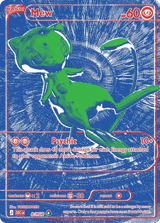
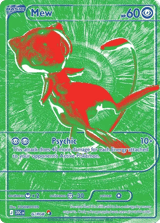
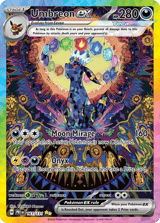
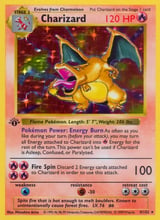
The most valuable cards in our price book right now: Mew (R) (30th Celebration, $4492.44); Mew (B) (30th Celebration, $4263.60); Mew (G) (30th Celebration, $3164.40); Umbreon ex (Prismatic Evolutions, $1186.84); Charizard (Base Set, $987.13); Victini (Black Bolt, $613.44). Vintage holos from the 1999–2000 sets dominate the top of most price lists.
Are old Pokemon cards worth anything?
Some are, most are not. Common modern cards are worth cents, while low-population vintage cards, first-edition holos and high-grade graded copies can reach hundreds or thousands of dollars. The only way to know is to look the exact card up — set, name and card number all matter.
Do Pokemon cards increase in value?
Over the long run scarce cards have tended to rise, but there is no guarantee for any individual card. Every card page on Pokefoil keeps 30 days of daily market history, built from completed sales, so you can see a card's actual trend before deciding to sell or hold.
Should I grade my Pokemon cards?
Grading (PSA, BGS, CGC) protects a card and usually raises its price, but the premium concentrates at the top grade — PSA 10 copies of scarce cards commonly trade at 2–4× the raw price while PSA 8 barely clears it (see the grading table above). Submission cost comes first, so check a grading service's population report before sending anything in. Pokefoil's daily numbers are raw-card market prices from TCGplayer's completed-sales index, so they exclude graded copies.
How often are prices updated, and is it free?
Every card's market price is rebuilt daily from TCGplayer's completed sales, last updated 2026-11-09, together with 30 days of history, what each condition actually sold for, and how many copies moved in that window. Checking values on Pokefoil is free and needs no signup. Figures are market references, not offers — always confirm before a transaction.
Browse Pokemon card sets by value
Looking for a specific card? All 2,947 priced cards, ranked by value with set and market price, live in the full Pokemon card price guide →